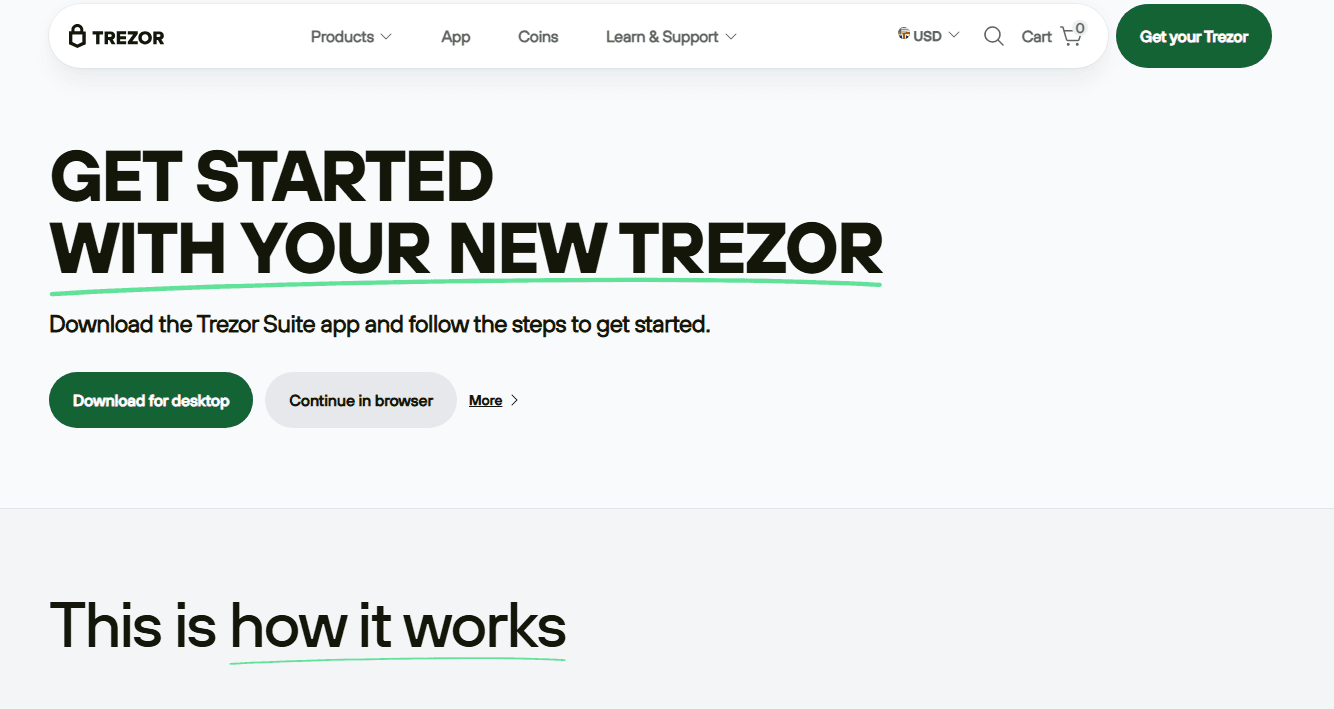
Trezor.io/Start – A Complete 1200-Word Beginner’s Guide
Getting started with a hardware wallet can feel intimidating, especially if you’re new to cryptocurrency security. Trezor.io/start exists to simplify that process by giving users a guided, secure path to setting up their Trezor device, learning basic crypto safety, and gaining full control over their digital assets. Whether you’re using a Trezor Model One or the more advanced Trezor Model T, the setup principles are similar: secure your device, install the necessary software, create recovery information, and begin managing your coins with confidence.
This guide explains the full onboarding experience you follow through Trezor.io/start—written in friendly, easy-to-understand language while still covering everything in depth.
What Trezor.io/Start Really Does
Trezor.io/start isn’t just a webpage—it’s the central gateway for activating a brand-new Trezor hardware wallet. When you visit the site with your device in hand, the instructions help you:
Verify your device authenticity
Install the Trezor Suite application
Update firmware
Generate a recovery seed
Set up a secure PIN
Learn basic operational and safety tips
Access your dashboard to begin sending, receiving, and holding crypto
Instead of leaving users to figure things out alone, Trezor.io/start walks you through each task in a structured way so that nothing important is skipped.
Unboxing Your Trezor Wallet Safely
Before you visit the setup page, inspect your Trezor device and packaging. Trezor packages their wallets with security seals and protective layers so you can be confident it hasn’t been tampered with. You should check for:
A properly sealed box
No tears, glue marks, or strange re-taping
A device that looks unused and undamaged
No extra papers, cards, or attachments that look suspicious
If everything looks normal, you’re ready to proceed with the rest of the setup process.
Connecting Your Trezor to Your Computer
Once you’re ready, connect the Trezor hardware wallet to your computer using the cable provided with the device. When it powers on for the first time, you’ll typically see a welcome screen and a prompt to visit the setup site. Trezor devices do not come pre-configured because that would create security risks. Everything is generated during setup so that only you control your private keys.
Installing Trezor Suite
The next step at Trezor.io/start is downloading Trezor Suite—the official software for managing Bitcoin, Ethereum, and many other supported cryptocurrencies. Trezor Suite provides a secure interface for performing wallet actions such as checking balances, confirming transactions, and organizing accounts.
Trezor Suite is known for:
A clean, user-friendly interface
Built-in security warnings
Local processing of sensitive actions
Clear transaction previews
Advanced privacy features
Once installed, the app will detect your newly connected device and guide you through pairing and setup.
Updating Your Firmware (If Required)
Most new Trezor devices require a firmware installation or update during the first setup. Firmware is the operating system that runs on your hardware wallet, and keeping it updated ensures that:
You have the newest security protections
You can use the latest supported coins
You avoid software bugs
You improve performance and reliability
Updating takes only a minute or two. Follow the on-screen instructions, keep the device connected, and allow the process to finish completely.
Creating Your Recovery Seed Phrase
One of the most important steps at Trezor.io/start is generating your recovery seed phrase. This phrase—usually 12, 18, or 24 words—is the master backup for your wallet. Trezor generates it offline inside the device so no one, including Trezor employees, ever sees or stores it.
When the device displays the seed:
Write the words on the provided recovery card
Keep the card offline and private
Never take photos or digital notes
Never share the seed with anyone
Store it in a safe location
If your hardware wallet is ever lost, broken, or stolen, this seed is the only way to restore your crypto on a new device.
Creating a Secure PIN
After your seed phrase, the next critical step is choosing a PIN. This PIN protects your device physically, preventing unauthorized access. A good PIN should be:
Long enough to be hard to guess
Not tied to personal information
Something you can remember
Something you never share
Your Trezor device will show random keypad patterns, and Trezor Suite displays blank positions—you match them without exposing the actual numbers. This pattern-shuffling feature greatly increases security.
Completing Device Setup
Once your PIN is set and the seed phrase is safely stored, Trezor Suite will usually ask for some final preferences:
Enable or disable analytics
Choose standard or advanced wallet modes
Decide whether to enable privacy tools
Select a name for your device
Set up additional passphrases (optional)
A passphrase can act as an extra layer of security, creating hidden wallets that only open when you enter the correct passphrase. This option is ideal for users who want maximum protection.
Understanding the Trezor Suite Dashboard
After setup, you’ll arrive at the main interface where you manage your cryptocurrencies. The Trezor Suite dashboard provides:
An overview of total portfolio value
A list of all coins and accounts
Recent transaction history
Market charts and indicators
Options for sending and receiving coins
Every action that involves private keys must be confirmed on the physical Trezor device itself. This ensures that even if your computer is compromised, transactions cannot be manipulated without your approval.
Adding Cryptocurrency Accounts
Before transferring any funds, you’ll need to add accounts for the coins you want to manage. At Trezor.io/start, you learn that accounts are separate spaces where specific cryptocurrencies live. For example, you might add:
A Bitcoin account
An Ethereum account
A Litecoin account
A stablecoin account
A DeFi-related token account
Each account has its own address set, allowing you to organize your crypto holdings neatly.
Receiving Crypto to Your Trezor Wallet
To receive crypto safely:
Open your Trezor Suite.
Select the account you want to receive funds in.
Choose “Receive.”
Let the device display the address.
Verify that the address shown on the physical device matches the one on your computer screen.
This verification is essential because it protects you from malware that might try to replace the displayed address.
Once verified, you can share the address with the sender or copy it to an exchange withdrawal page (as long as you’re legally allowed to use such services in your country).
Sending Crypto
Sending funds works similarly but includes confirmation steps to keep you safe:
Enter the recipient’s address in Trezor Suite.
Choose the amount to send.
Review fees and transaction details.
Check everything carefully on your Trezor device.
Approve the transaction physically.
Because every transaction must be confirmed on the hardware wallet, accidental or malicious transfers are far less likely.
Security Best Practices Trezor.io/Start Teaches
The setup page emphasizes a series of important safety habits:
Keep your recovery seed offline
Never trust anyone asking for your seed
Do not store photos or screenshots of your seed
Stick to official software
Avoid unknown browser extensions
Keep your computer secure
Use strong passwords
Avoid public Wi-Fi for managing crypto
Enable passphrase protection if needed
These habits significantly reduce risks and help ensure long-term safety for your digital assets.
Advanced Features After Setup
Once you master the basics, Trezor Suite offers more powerful tools:
Coin control options
Custom transaction fees
Hidden passphrase-protected wallets
Crypto labeling and categorization
Market tracking tools
Multiple device management
These features make the Trezor ecosystem ideal for beginners and advanced users alike.
Conclusion
Trezor.io/start is designed to help you set up your Trezor device the right way from the very beginning. It makes the process comfortable and secure, teaches you best practices, and ensures you take each step with confidence. Once your hardware wallet is fully configured, you gain complete control over your crypto—not stored on an exchange, not vulnerable to online hacks, and fully backed up by your recovery seed.
With your device prepared, Trezor Suite installed, and your accounts created, you’re ready to explore the crypto world with one of the safest tools available today.